



For many working Filipinos, relief often comes in short moments that are rarely enough to keep up with life’s demands. Beneath braving the daily grind, one question won’t quit daily conversations: diploma o diskarte?
Many people in today’s economy debate whether success depends on formal education or street smarts, while others say both are necessary to pair up as their armor in the real world.
But beyond online and offline discourse, it takes on another level when reality slowly turns a debate into a norm. The choice between a degree and resourcefulness is actually shaped by conditions such as rising costs, underemployment, and employment disparity, which leave Filipinos with few tangible options.
Chasing income
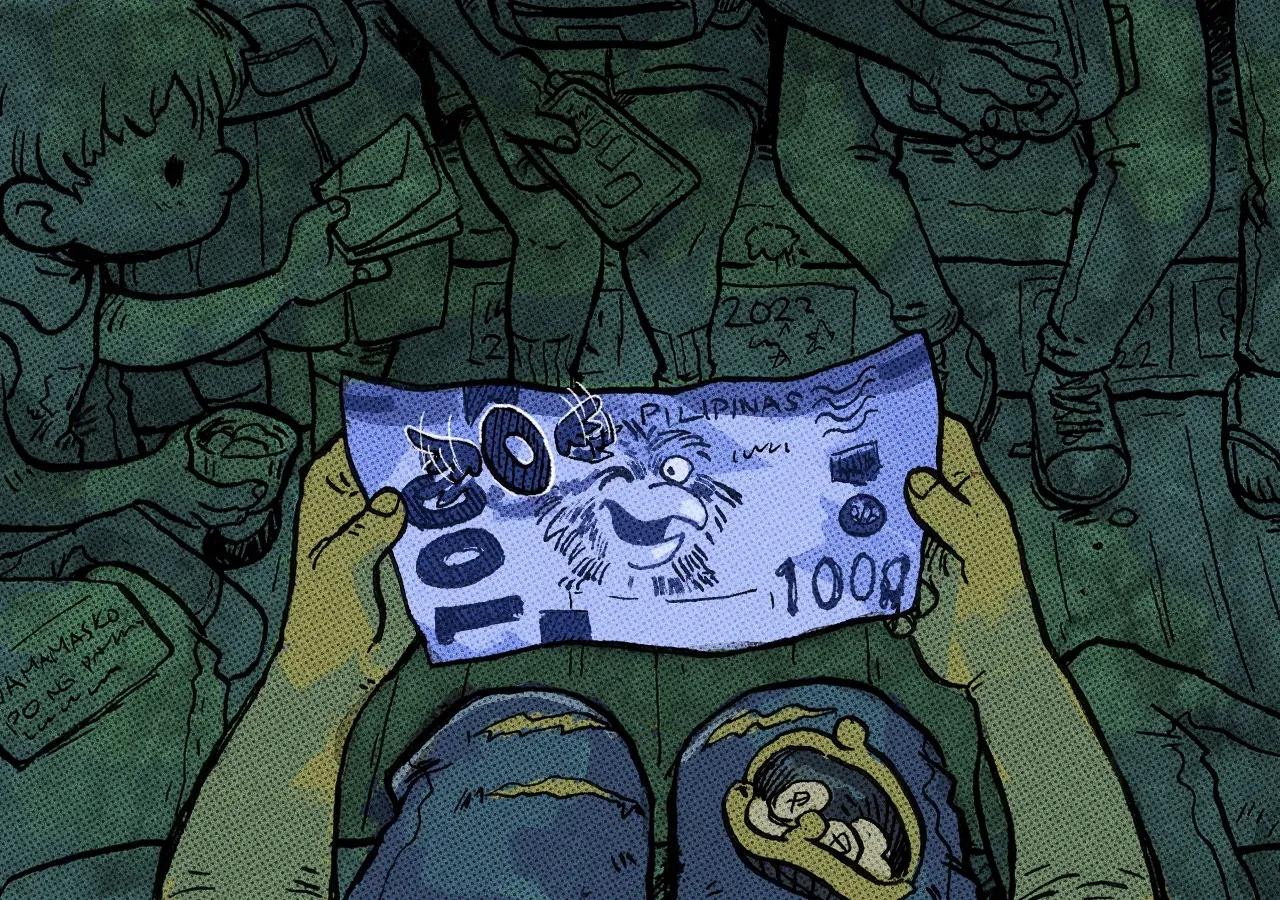
(Art by Guia Abogado/Rappler)
Diskarte means stories of resilience or ways to get by and make ends meet. It reflects how Filipinos find ways to cope despite limited opportunities in their everyday survival for their family, loan payments, and the future they are building.
Diskarte then becomes a necessity for overcoming life’s challenges, but depending solely on it also exposes deeper scars.
The country’s unemployment rate dropped by 5.8-percent in February, from January’s 5.1-percent. While it could be good news, the Philippine Statistics Authority (PSA) also reported that the underemployment rate fell to 11.8 percent, a 2.6-percent drop from January’s 13.2-percent.
Still, 5.84 million Filipinos are seeking additional work amid rising prices. Despite its improvement, millions remain unemployed and underemployed because of shrinking job markets and pursuing roles that don’t align with their education.
Instead of seeking full-time jobs, many opt for freelancing gigs or informal work to earn a living. Although they are often unstable, collecting side hustles has become desirable as the purchasing power of hard-earned pesos erodes due to cumulative inflation over the past eight years.
Since then, policies were crafted to recognize skills development and create alternative pathways, especially for those who did not finish college due to familial obligations or to earn an income. Among those policies are the Expanded Tertiary Education Equivalency and Accreditation Program (ETEEAP).
The Republic Act 12124, ratified by President Ferdinand Marcos Jr. in March last year, allows professionals with over five years of experience to formalize their skills into academic degrees rather than pursue traditional learning.
This is based upon assessment of their skills, knowledge, and competence. The Commission for Higher Education (CHED) has led the charge to develop standards, assess applicants, and vest special powers in institutions to implement them.
While the ETEEAP widens access to degrees, challenges such as hiring biases and limited job security persist and overshadow ideal employment outcomes.
Such gaps suggest workers have no choice but to navigate this instability, where survival depends on diskarte or constant adjustments rather than stable work.
The first of May commemorates and values laborers in the Philippines, but it has also exposed structural inconsistencies that shape the workforce.
Between diploma or diskarte
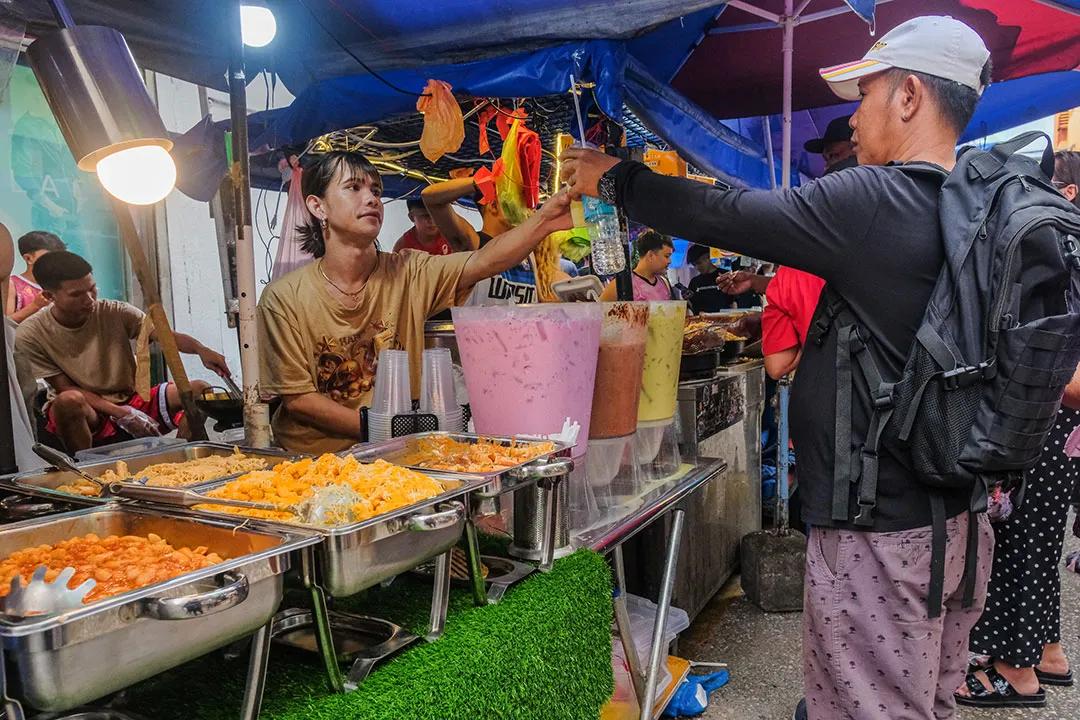
(Photo by Ryan Baldemor/Philippine Star)
Under these conditions, diskarte now undergoes a total level-up. What was once sought for its ingenuity becomes more vital as a form of resilience in a system where earning a diploma doesn’t immediately translate into lucrative employment.
But the issue does not end with adapting to the norm of nonstop hustle. Long before they enter the workforce, conditions such as low wages, rising costs, underemployment, and limited job security have forced Filipinos to constantly adjust.
With these conditions that are dragging workers, they are left with no choice but to stretch thin–juggling shifts and seeking informal work to keep their incomes and their families afloat, especially in times of hardship.
The culture of diskarte doesn’t necessarily replace the power of a diploma, and for many, both qualities can go hand in hand. However, this raises a deeper question amongst ourselves: why should we choose at all? Question the system instead of debating which is better. Why isn’t long-term employment secured for everyone? Shouldn’t we have these opportunities to begin with?
It should not be about favoring one over the other, but a wake-up call to the holes in the system that place workers in limbo, no matter the path they take.











Comments
Loading comments...
Leave a Comment