



Many people might be no stranger to the voice in their head that loves to criticize and nitpick every little mistake and flaw. I, for one, have grown familiar with this inner voice and have come to expect it whenever I fail to excel or meet my expectations. While criticism can be helpful at times, it becomes harmful when negative criticism is all you can hear.
The truth is, that voice never truly leaves. Yet one can learn to silence it, ignore it when it gets too loud, and eventually push it to the back of the mind in favor of choosing to be kinder to oneself.
The truth behind the inner critic

(Photo from Honey and Clover (2006))
Being one’s own worst critic is a shared experience. According to an article on understanding self-criticism, a lot of people experience negative self-talk. Every mistake, flaw, and misstep will inevitably be given harsh judgment. It’s a common pattern, proving that no one is alone in being overly critical of themselves.
While a certain level of self-criticism is good for motivation and growth, excessive amounts of self-criticism can cause adverse effects on mental health and well-being. Recognizing flaws and striving for growth are important, but many tend to overlook their progress and the things they’ve done right—choosing instead to listen to their inner critic.
In my case, being my own worst critic has certainly helped me to improve in some aspects, but ultimately, this voice has negatively impacted how I view myself and my continuing struggle with self-love. Whenever I don’t meet my expectations, whenever I fail or make a mistake, whenever I dwell too much on my flaws, the inner critic comes in and fills my mind with even more harsh words and reinforces the belief that I should continue to put myself down for these things.
However, a thought came to my mind, “Are my flaws all that I am?”
Upon seeing just how much I’ve become my own worst critic, I realized that I must do something about this voice and learn to instill self-compassion within my mind.
While it was difficult to do so at first, it was not impossible. And over time, I managed to learn how to silence my inner critic and practice self-love.
On forgiveness and silencing the voice
(Photo by Geloy Concepcion)
Whenever a harsh thought comes up, I’d ask myself, “Would I say these things to someone I cared about?” If not, then why would I repeat those thoughts to myself? This line of thinking helped me to overcome some of the harshest comments my mind conjured. After all, it is unfair that I am kind to everyone else but myself. Sometimes, the person we must show the most love to is ourselves.
But, how exactly does one practice self-love?
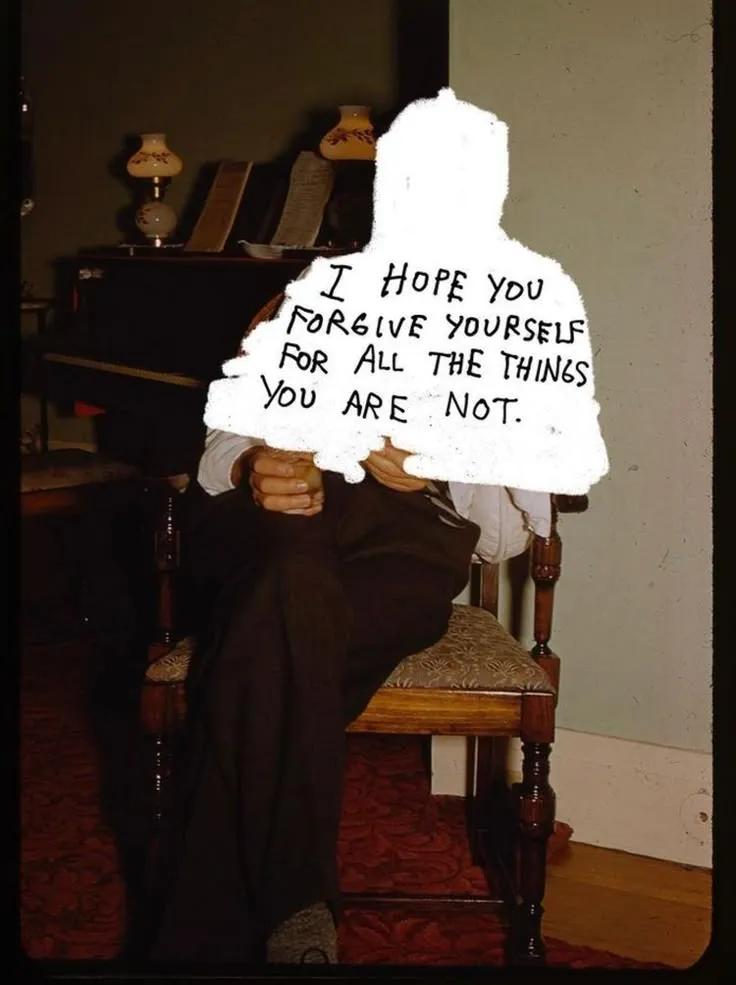
During my lowest moments of doubt and self-loathing, I found it hard to get past the mistakes I made, all my flaws, and everything I failed to do. Self-love seemed impossible as the voice in my head only grew louder. But if I wanted to silence this voice, I realized the main thing I had to do was to forgive myself.
Silencing the inner critic starts with forgiving oneself—for what was done and for what wasn’t. Once I began to forgive myself for all these things, I felt as if I could breathe easier, as the weight of my failures no longer haunted me every second. And with this forgiveness came the realization that everyone is just as flawed as I am. While regret may linger, it isn’t permanent. People can move forward from their lowest moments.
By forgiving myself, I came to realize that no one is perfect; people are bound to make mistakes, and while it is good to acknowledge them, there is no need to punish ourselves for them. Although calling ourselves out can be good, we must learn to look past the negative and redirect the inner critic’s attention to our achievements, our best qualities, and our moments to be proud of.
Forgiveness is key. It worked for me. Try it, and it might just work for you.
Learning self-love and silencing the inner critic are easier said than done. It’s easier to read about someone else’s experiences than actually follow their advice. Until now, I have moments where I slip up and give in to the voice inside my head telling me I’m not enough.
But just like everything else that needs to be learned, this, too, is a work in progress.
Over time, the inner critic's voice will weaken and I am able to give myself the recognition I deserve.
Maybe I didn’t get the highest score on that test. Maybe I failed to say the right thing. Maybe I didn’t meet all my expectations. But there’s always room to improve — and always another chance to try again.












Comments
Loading comments...
Leave a Comment